Built to make difficult systems easier to trust, operate, and improve.

Four systems begin with a different failure mode—uncoordinated agents, unaccountable AI operations, hindsight-contaminated research, and misleading model evaluation. Each page shows the diagnosis, the feature logic, the working evidence, and the boundary of what that evidence establishes.

01Problem firstWhy the visible symptom was not the real constraint.
02System logicHow the parts reinforce one operating outcome.
03Evidence in contextReal screens, public code, measured results, and explicit limits.
Four complementary signals

C2 leads because it answers the most current systems problem: how autonomous work stays accountable. Relay extends that discipline into model and infrastructure operations. Area10 applies it to financial decisions. The MIT capstone shows the same judgment at the model-evaluation layer.

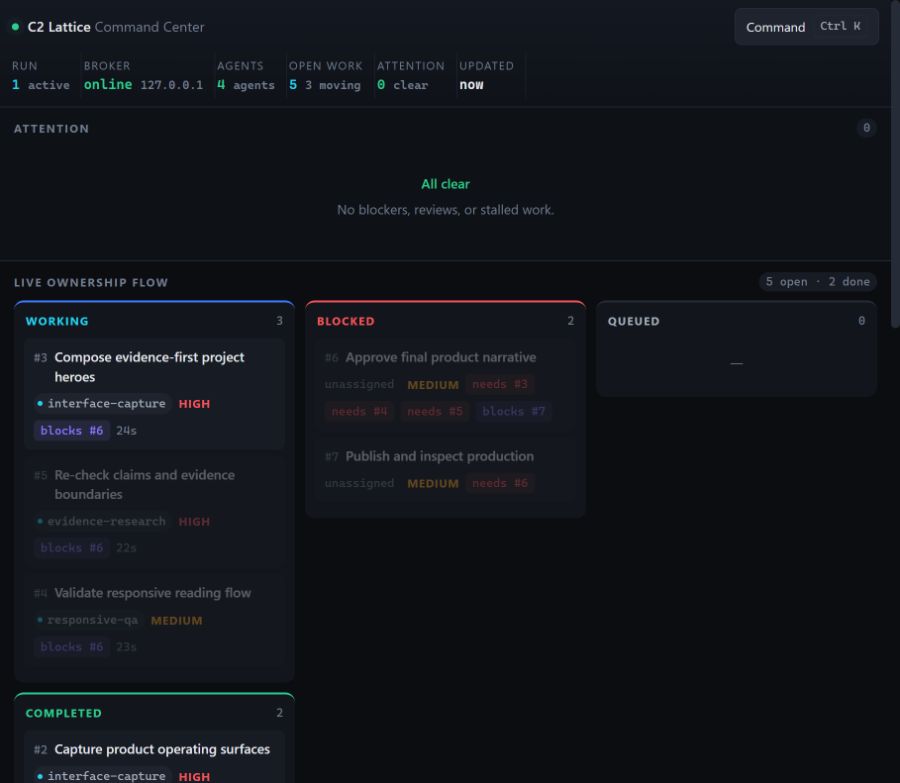
C2 Lattice command center showing active workers, task dependencies, blocked work, completed evidence, and run health
Operating interface + public sourceInspect the evidence ↗︎
01Validated agent infrastructure

C2 Lattice

Fast agents only create leverage when ownership, authority, dependencies, and recovery stay visible.

A local control plane built before agent-management systems became standard: not another agent, but the coordination layer that lets many agents work in parallel without losing ownership, state, or recoverability.

  • Explicit ownershipTask DAGs · claims · evidence
  • Safe parallelismLocks · messages · versioned memory
  • Bounded authorityHMAC identity · RBAC
22coordination tools
465named local tests
28 / 28clean-checkout acceptance
See how the system works↗︎
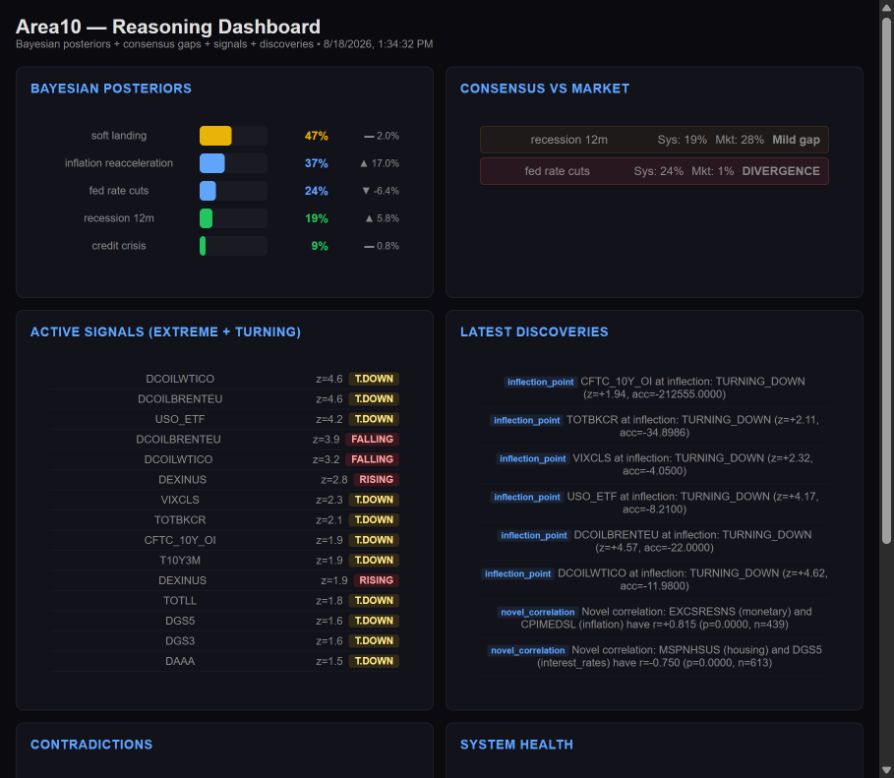
Area10 reasoning dashboard showing Bayesian posteriors, consensus gaps, active signals, discoveries, contradictions, and system health
Operating product + warehouse auditInspect the evidence ↗︎
03Point-in-Time Decision Intelligence

Area10

A decision should be judged by what was knowable then—not by revised data available now.

A research and decision system built around a simple but routinely violated constraint: historical analysis must use the information that actually existed at the time.

  • Point-in-time retrievalVintage-aware data access
  • Source-health gatesFreshness · drift · incidents
  • Traceable reasoningClaim-to-decision lineage
39.1Meconomic observations
161,525catalogued series
3,415graded predictions in one audit
See how the system works↗︎
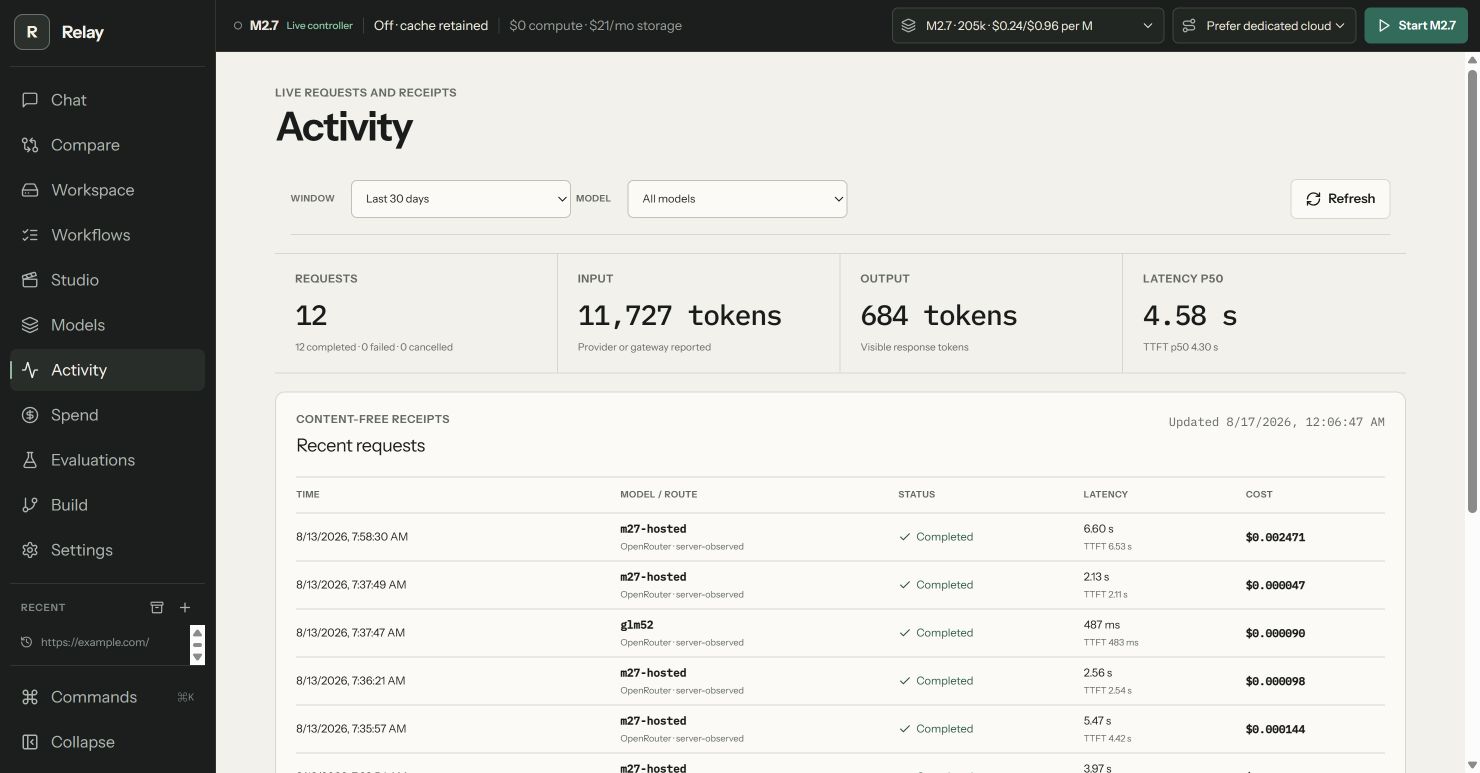
Relay activity ledger with completed requests, token use, latency, and cost
Live operating systemInspect the evidence ↗︎
04Secure private AI operations

Relay

Relay makes private AI workflows observable, governable—and therefore improvable.

A private AI operating environment built to answer the questions ordinary chat interfaces erase: which model actually ran, what context it saw, what it cost, how it performed, and what should change next.

  • Curated working bench7 operating routes
  • Durable run receiptsAttribution · provenance · cost
  • Compare before standardizingSide-by-side route evaluation
7curated operating routes
20case evaluation baseline
$0/hrmanaged GPU compute when off
See how the system works↗︎
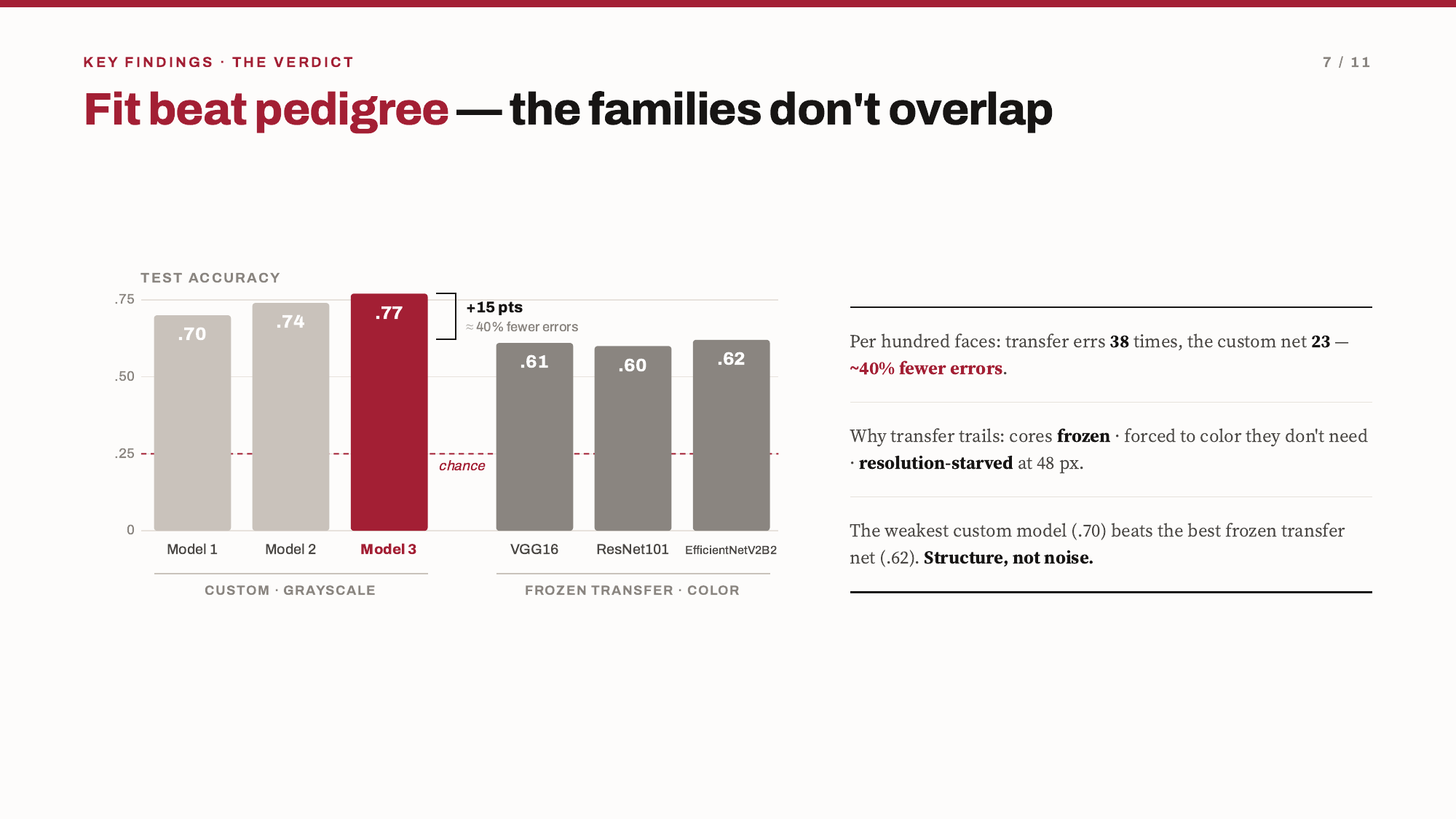
Final MIT capstone slide showing the custom CNN at 77 percent accuracy versus the strongest transfer model at 62 percent
Third-party-visible scored workInspect the evidence ↗︎
05Evaluated machine learning

Facial-expression classification

The strongest model was selected from the error pattern—not the prestige of its architecture.

An MIT Professional Education capstone built to compare six deep-learning approaches fairly, then turn class-level failure—not a single headline score—into the deployment recommendation.

  • One evaluation boundary6 models · 1 held-out boundary
  • Architecture comparisonCustom CNN + transfer baselines
  • Class-level diagnosisSad → neutral risk surfaced
6approaches compared
76.56%held-out test accuracy
4expression classes
See how the system works↗︎